Hellabrunn is committed to protecting the Ecuadorian brown-headed spider monkeys in the Canande Reserve in northern Ecuador. This is home to the largest remaining population of this critically endangered subspecies of the brown-headed spider monkey. The reserve is protected by the Jocotoco Foundation and is supported by Hellabrunn Zoo, amongst other things, through the funding of five park rangers.
Biodiversity hotspot under threat
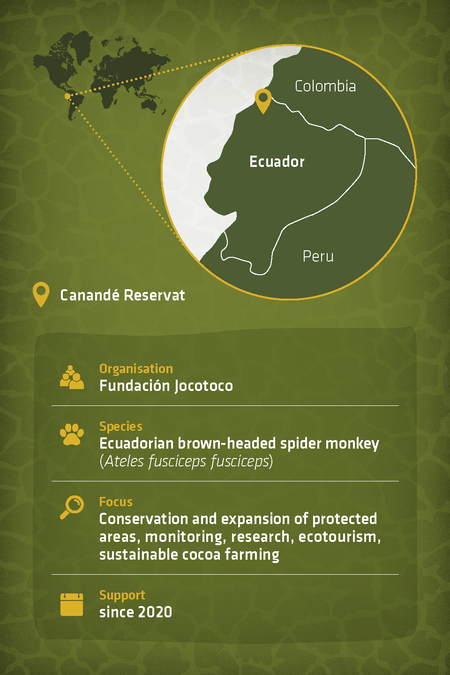
The Jocotoco Foundation has acquired and placed under protection over 42,000 hectares of rainforest in Ecuador, forming part of a nationwide network of 15 reserves. It works closely with the local population, creates jobs and carries out important educational work. The Canandé Reserve, covering just under 19,000 hectares, is situated in the Chocó, a lowland rainforest region west of the Ecuadorian Andes. This rainforest is particularly rich in species and ranks among the five most important biodiversity hotspots worldwide. At the same time, road construction and settlement development driven by the growing population in this area are leading to one of the highest rates of deforestation in South America. Only 2–5 per cent of the original forest area remains. The aim of the Canandé Reserve is to link the two state-protected areas, El Pambilar and Cotacachi-Cayapas National Park, thereby creating a large, contiguous forest area.
Home for the Ecuadorian brown-headed spider monkey
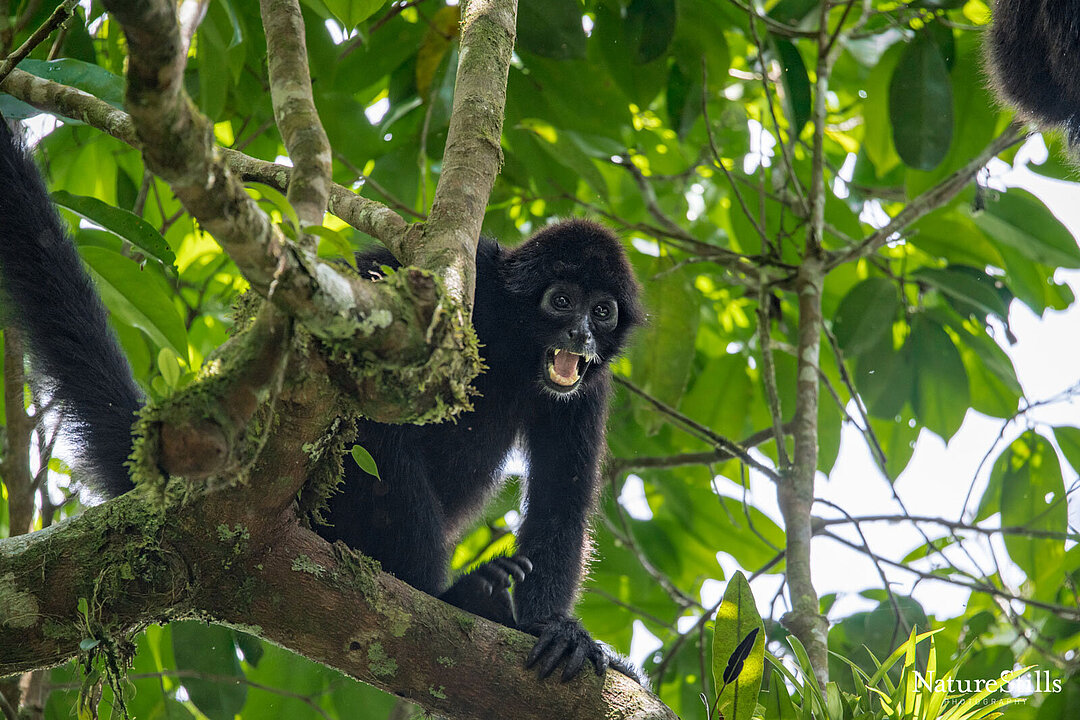
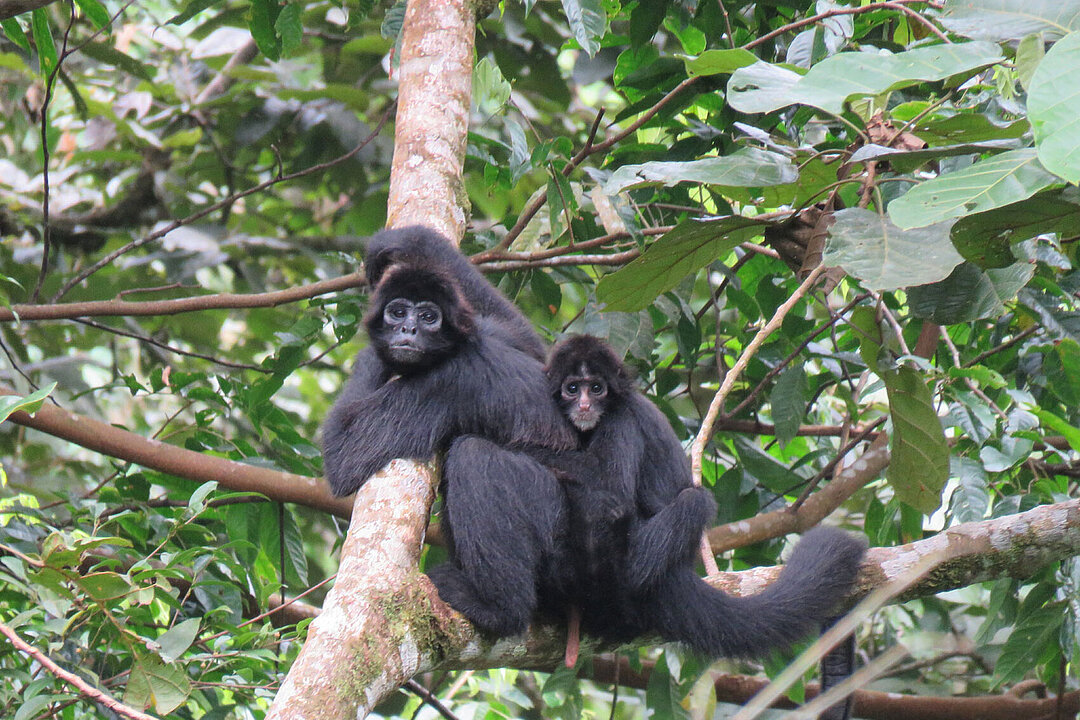
With a population of fewer than approximately 850 individuals, the Ecuadorian brown-headed spider monkey is one of the world’s most endangered primates. In the Canandé Reserve, synchronised censuses have confirmed the presence of more than half of the total population. It is therefore the largest known population of this subspecies. Daily patrols by park rangers have put a stop to the hunting of spider monkeys in the project area, and reforestation efforts are ensuring a continuous habitat, allowing the population to slowly recover.
Research in the Canandé Reserve
Since 2021, a German-Ecuadorian research group comprising researchers from 14 universities has been working in the Canandé Reserve. The aim of the research project, funded by the German Research Foundation (DFG), is to investigate the resilience and natural restoration of the Chocó rainforest. Findings to date show that afforestation projects can create species-rich habitats within a few decades, provided these can be colonised from neighbouring preserved forest areas.