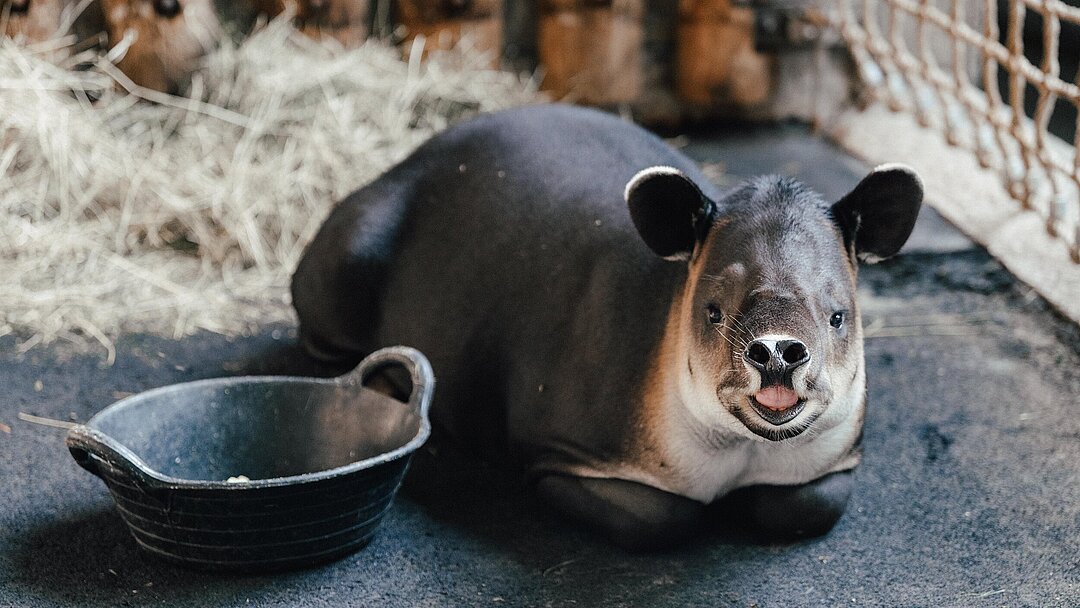
Munich Zoo has a new species: a male Baird’s tapir, also known as the Central American tapir, moved into the Rhinoceros House at Hellabrunn last Tuesday and is currently settling into his new surroundings. The enclosure has been redesigned both indoors and outdoors for this purpose and will in future provide space for a pair of tapirs. Visitors are expected to be able to see the charismatic new arrival gradually from Friday onwards, depending on how the acclimatisation process goes. Baird’s tapirs are among the largest mammals in Central America. The animals can weigh more than 300 kilograms. Their coat is grey-brown, and they can be recognised by the white tips of their ears. They live in forests, wetlands and other near-natural habitats and feed mainly on leaves, shoots, fruit and aquatic plants.
To begin with, a male Central American tapir has moved into Hellabrunn. In the future, a female from America is due to arrive in Munich. This species of tapir is currently very rarely kept in Europe. Apart from Hellabrunn, it can currently only be seen at Cottbus Zoo. The EAZA (European Association of Zoos and Aquaria) is currently setting up a European Endangered Species Programme (EEP) to coordinate the keeping and breeding of the species within European zoos.
“We are delighted to welcome a new species to Hellabrunn in the form of the Central American tapir. The new tapir enclosure enables us to further develop the Rhinoceros House in line with the Hellabrunn Master Plan and to focus the area more strongly on the Americas geozone in future. At the same time, the arrival of the Central American tapir means another endangered species is joining the Hellabrunn collection. In the long term, we also hope that by housing this species, we can support the EEP through breeding programmes,” said Lena Bockreiß, the curator responsible.
With this new exhibit, Hellabrunn also aims to raise awareness of the threats facing Central American tapirs and their natural habitats: the Central American tapir is classified as critically endangered by the International Union for Conservation of Nature (IUCN). The total population in Central America is estimated at fewer than 5,500 animals. The species is particularly threatened by the loss and fragmentation of its habitats. Conservation projects, such as the monitoring of wild populations and research projects in national parks, are intended to contribute to its preservation.
Mayor and Chair of the Supervisory Board Verena Dietl is also delighted with the new arrival: “Tapirs are truly among my favourite animals. That is why I am personally very pleased that we will be able to showcase this special yet highly endangered species in Munich in future and give our visitors the chance to get to know it better.”
Like all the animals at Hellabrunn, the tapir is free to retreat at any time. Consequently, particularly during the settling-in period, he may not always be visible to visitors.
Translated by Deepl / AI
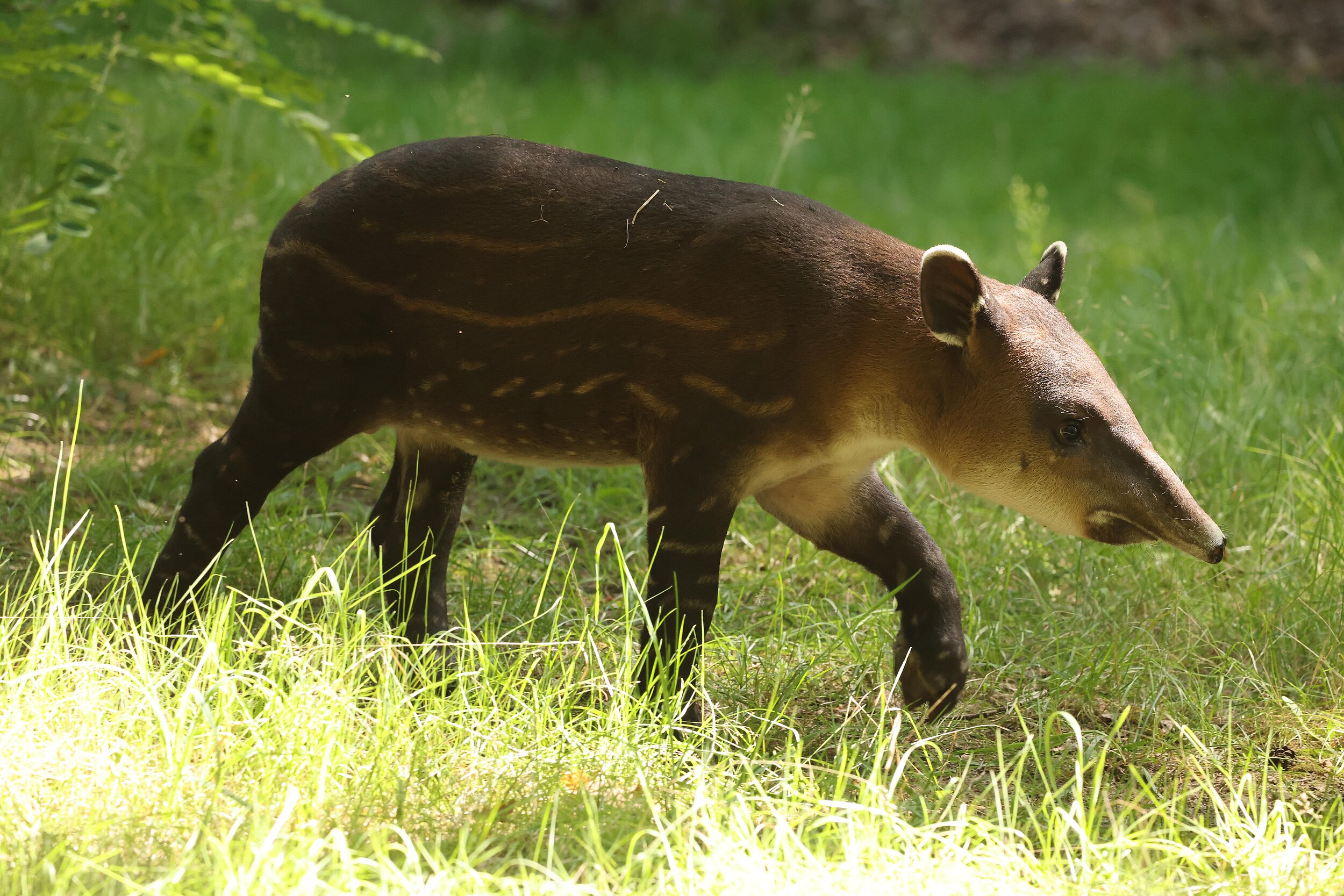
Der Mittelamerikanische Tapir 'Mattheo' im Jahr 2025 als Jungtier im Zoo Cottbus 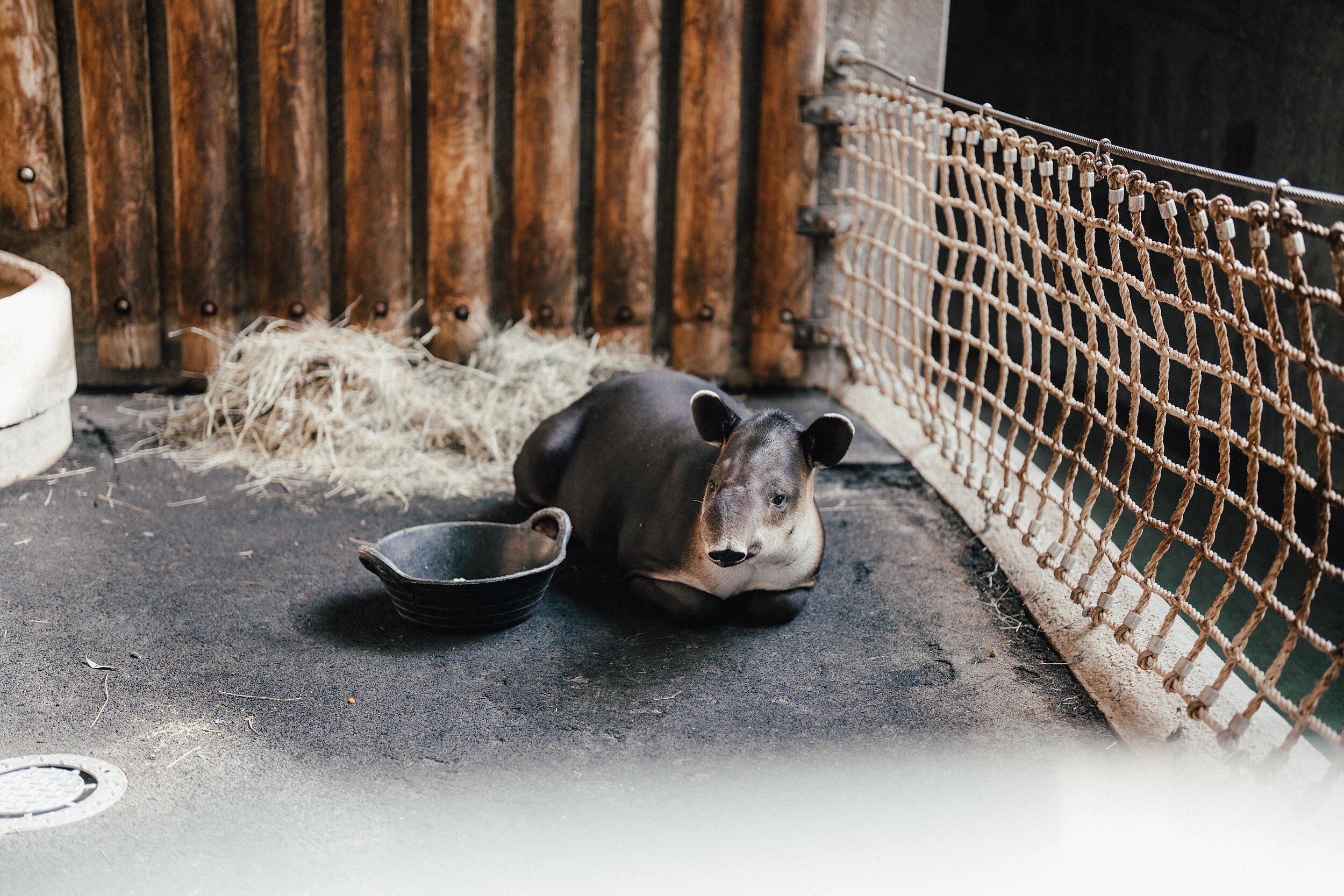
Der Mittelamerikanische Tapir 'Mattheo' in seiner Innenanlage im Münchner Tierpark Hellabrunn 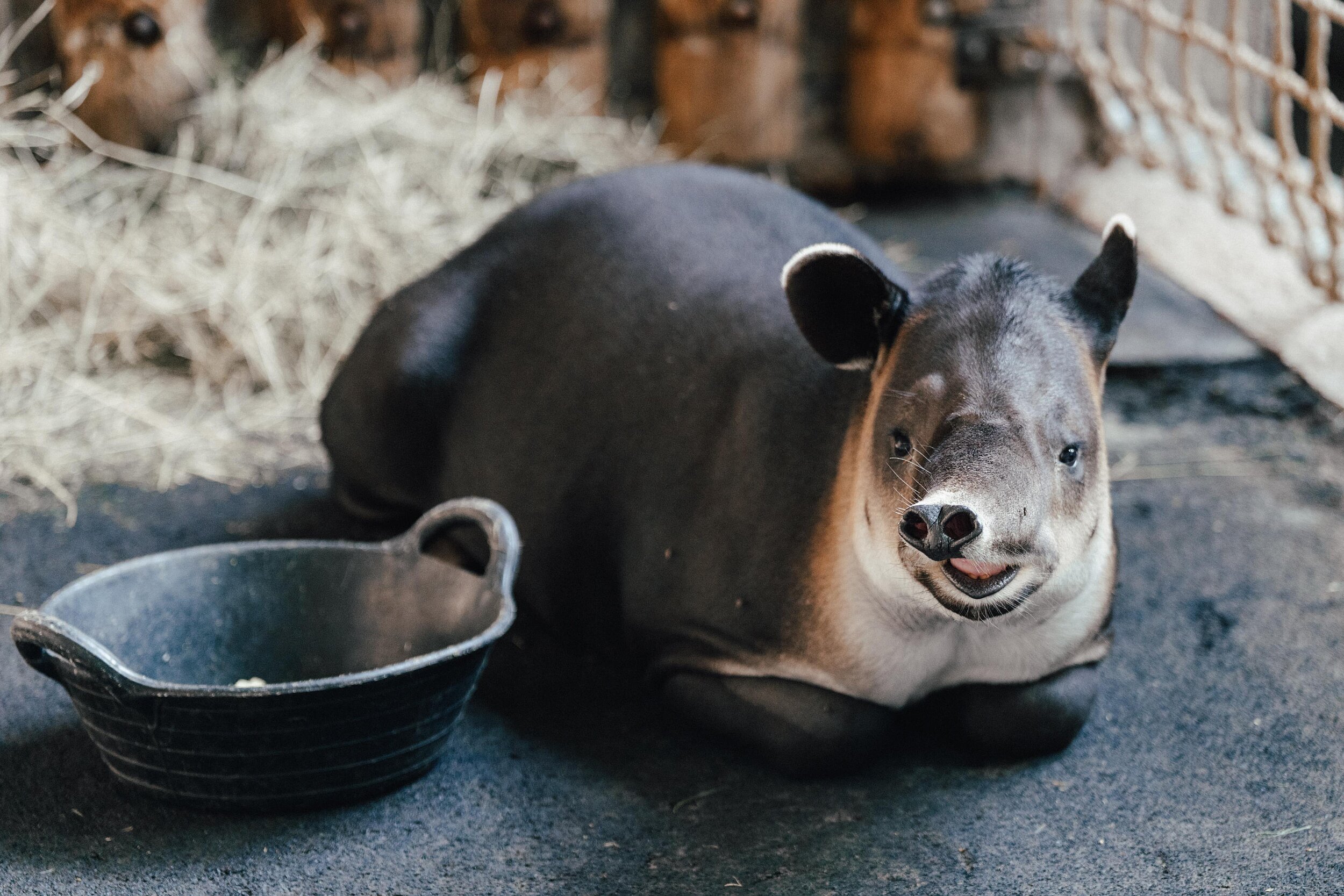
Der Mittelamerikanische Tapir 'Mattheo' in seiner Innenanlage im Münchner Tierpark Hellabrunn 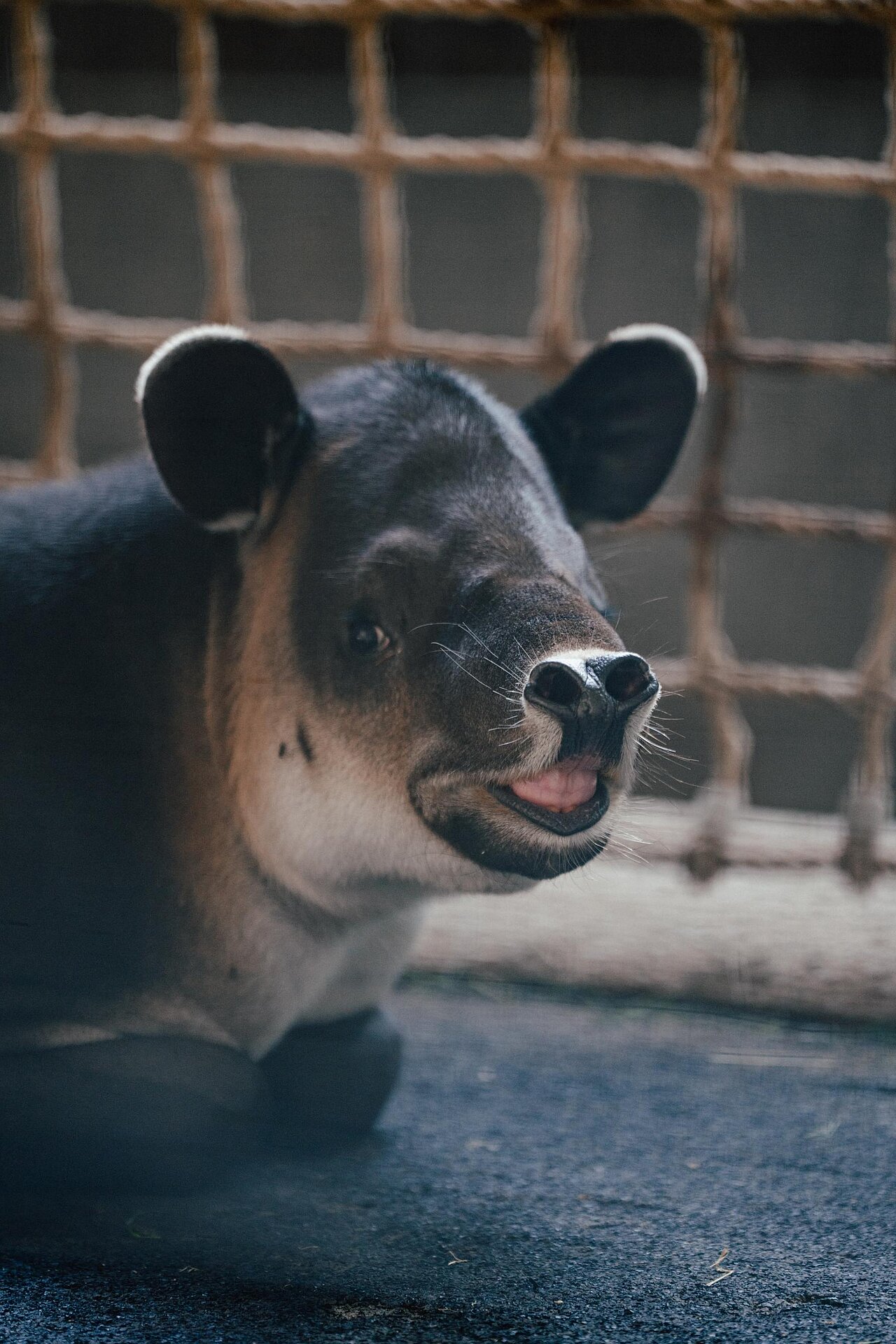
Der Mittelamerikanische Tapir 'Mattheo' in seiner Innenanlage im Münchner Tierpark Hellabrunn