Egyptian Tortoise
Testudo kleinmanni
- Family
- Tortoises (Testudinidae) (Testudinidae)
- Length
- 10 - 13 cm
- Habitat
- Desert and semi-desert landscapes on coastal plains
Queen of camouflage
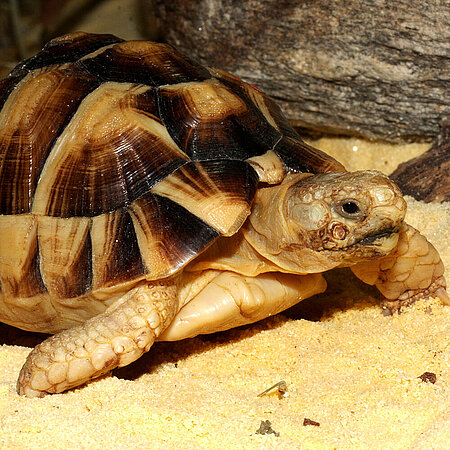
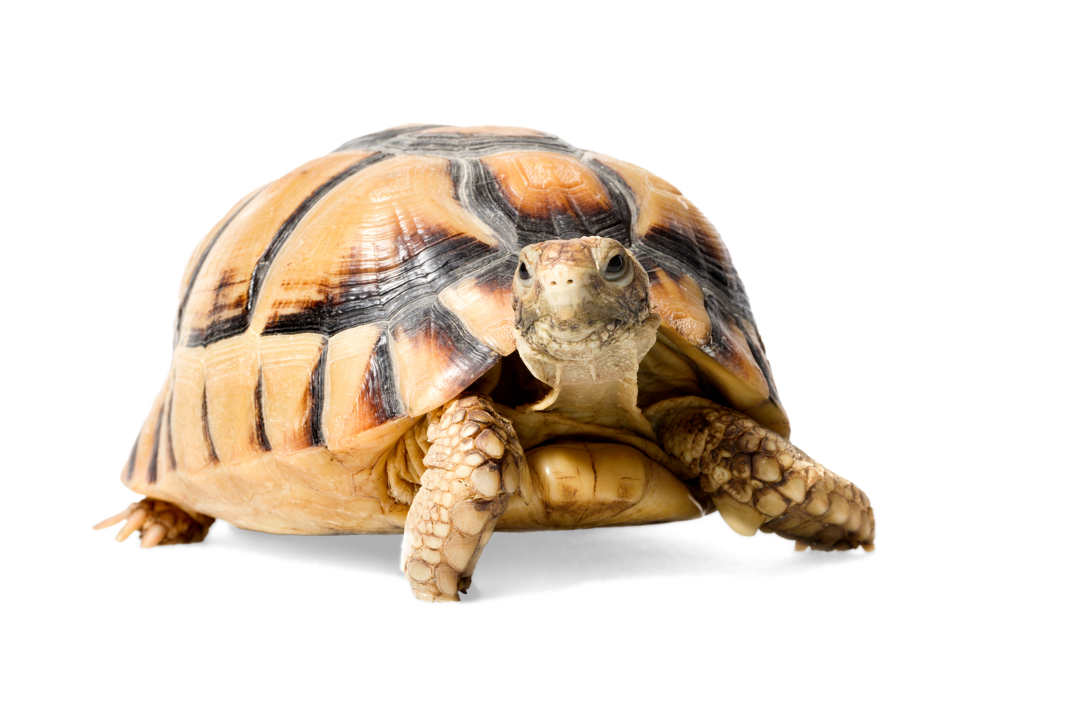
This small, high-domed turtle lives in the desert and steppelike coastal plains of North Africa and Israel, up to 120 km from the Mediterranean Sea. Its light yellow to sandy-coloured shell helps it remain well-camouflaged in the desert landscape, protecting it from predators and heat damage. Females are typically larger than males. After mating in spring, they then lay 1–4 eggs in shallow sandy burrows. The eggs can take 90–105 days to hatch.
Summer sleep instead of hibernation
The Egyptian tortoise is perfectly adapted to the dry climate. Instead of hibernating in winter, it takes summer naps during the hottest period of the year from June to August, when it burrows into the ground or seeks shelter in an abandoned rodent burrow to escape the heat. It is most active in spring, when the desert blooms. Due to its small size, it can survive on the limited food available in the desert.
Incubation temperature affects hatchling gender: 27–29 °C usually produce males, 30 – 32 °C females.
Distribution

Distribution
- Africa
Egypt

Hellabrunn Zoo participates in the European Endangered Species Programmes