Madagascar crested ibis
Lophotibis cristata
- Family
- Ibises and Spoonbills (Threskiornithidae) (Threskiornithidae)
- Habitat
- Wet and dry forests
Impressive appearance
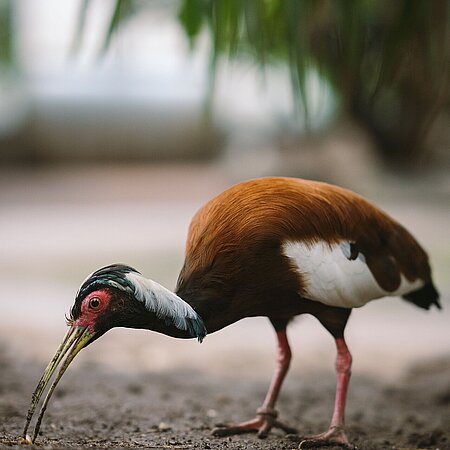
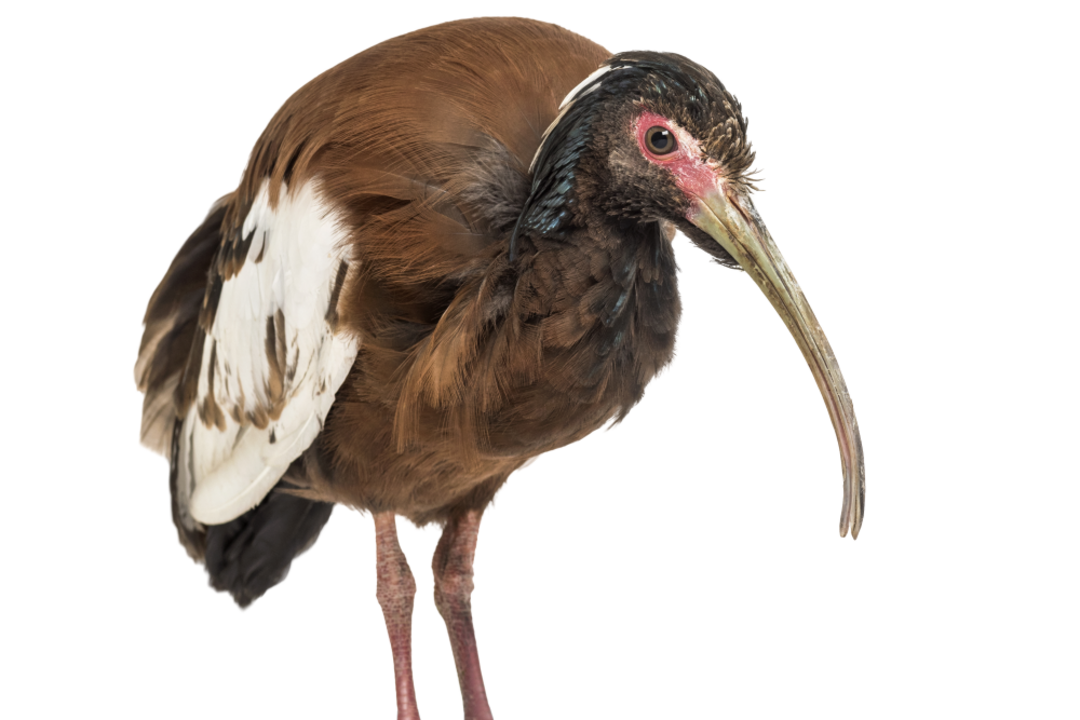
The Madagascar crested ibis can be easily recognised by its shimmering red-brown plumage, red face and striking crest. During mating, it raises its crest and back feathers to appear larger. Once widespread in Madagascar, it is now endangered due to hunting. As the largest bird species on the island, it is often hunted by bushmeat hunters.
With the beak on a treasure hunt
In search of food, the Madagascar crested ibis pokes around in the forest floor and mud with its thin, long, sickle-shaped beak. Ibises have slit-shaped nostrils at the base of their beak so that they can continue to breathe while foraging underwater or on the ground. They find their prey mainly by feeling it with the tactile sensors of their beaks; only rarely do they use their eyesight.
In contrast to many ibis species, the Madagascar crested Ibis often lives as a solitary bird or in pairs and not in large colonies.
Distribution