Einleitung
Hellabrunn Zoo supports the Waldrappteam, a conservation project that is committed to reintroducing the northern bald ibis (in German known as “Waldrapp”), one of the world's most endangered bird species, to the Alps. The project is among the largest conservation efforts in Europe, and has yielded successful results. The aim of the project is to establish self-sufficient migratory colonies in Alpine regions.

A long-lost friend
Up until the 17th century, the northern bald ibis was a familiar bird in Central Europe, especially in the Alps. Sadly, the chicks were considered a delicacy and were hunted so intensively that the species was completely wiped out in Central Europe. In fact, there was a long period when, with the exception of a few groups in human care, the only surviving colonies were a sedentary population in Morocco and a small migratory population in the Middle East. Since its launch in 2002, the Waldrappteam has been working to establish a habitat in Europe for the migratory bird. The European Union recognises the importance of this project and supports it financially under the LIFE+ funding programme.
How is a migratory population established?
Some migratory birds, such as the northern bald ibis, learn the route to their wintering grounds by flying with their parents on their first journey. A simple reintroduction of the species to the region is therefore not enough to establish a self-sufficient population. The reintroduced northern bald ibis needs to be taught the migratory routes to their winter quarters. It works like this:
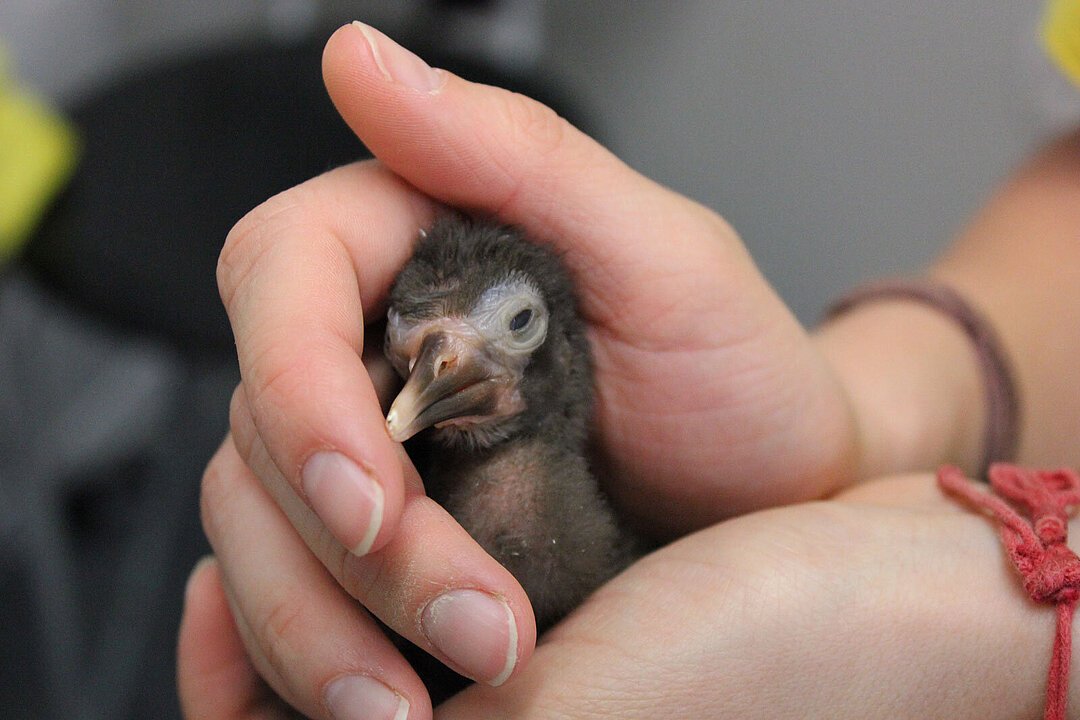
- Chicks hatched in zoos are reared by hand, with a human foster parent assigned upon hatching.
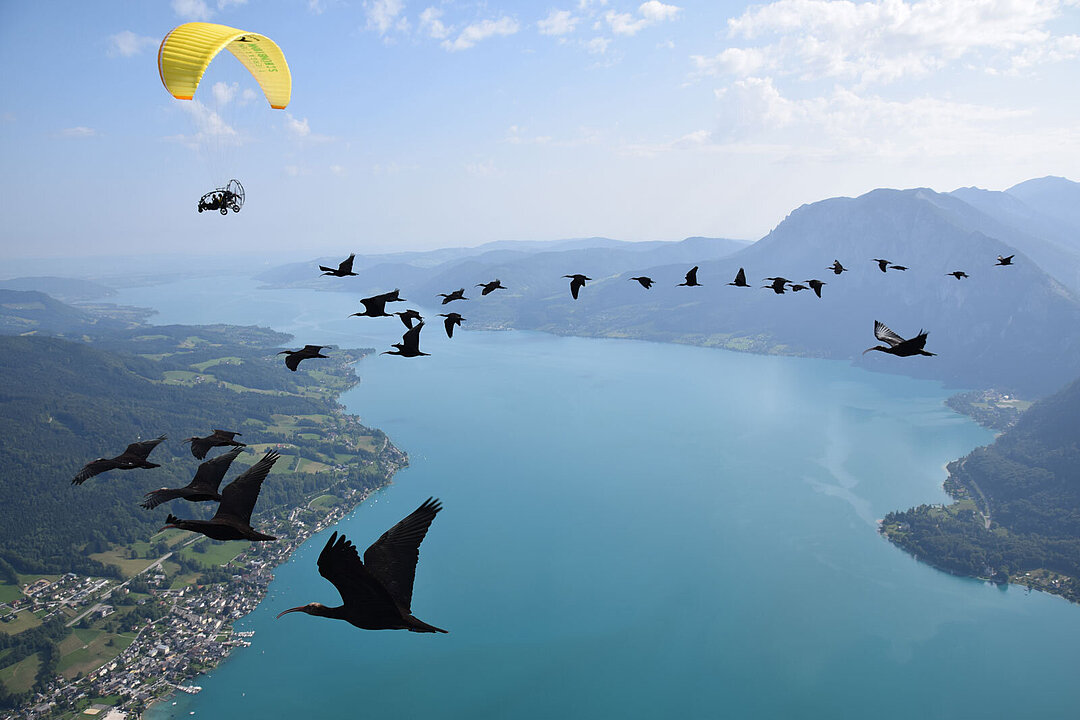
- As soon as the young birds are able to fly, they are trained to follow the project’s microlight aircraft along a migration route.
- When the human foster parent flies south in the microlight aircraft in the autumn, the young birds will follow and thus learn the migration route to their wintering ground.
- Upon reaching sexual maturity, they return to their breeding grounds via the migration route they have learned.
- At the beginning of the following autumn, these trained birds will then fly unassisted with their young to the wintering grounds.
Achievements
In 2007, the Waldrappteam made its first successful flight with northern bald ibises over the Alps to Italy using a microlight aircraft. Four years later the birds began returning unassisted to the starting point in Burghausen, Germany. It took a few more years for a self-sufficient breeding colony to be established, the first in Europe for 400 years. A huge success for the project and the birds. There are now plans to establish further self-sufficient migratory colonies in the Alps. The new project regions are in Überlingen, Rosegg, Goldau, Bussolengo and Kuchl.
In addition to its reintroduction efforts, the Waldrappteam is trying to curb illegal hunting of the birds by monitoring individual birds with GPS trackers. They work with Italian hunting associations to raising awareness for this equally important cause.