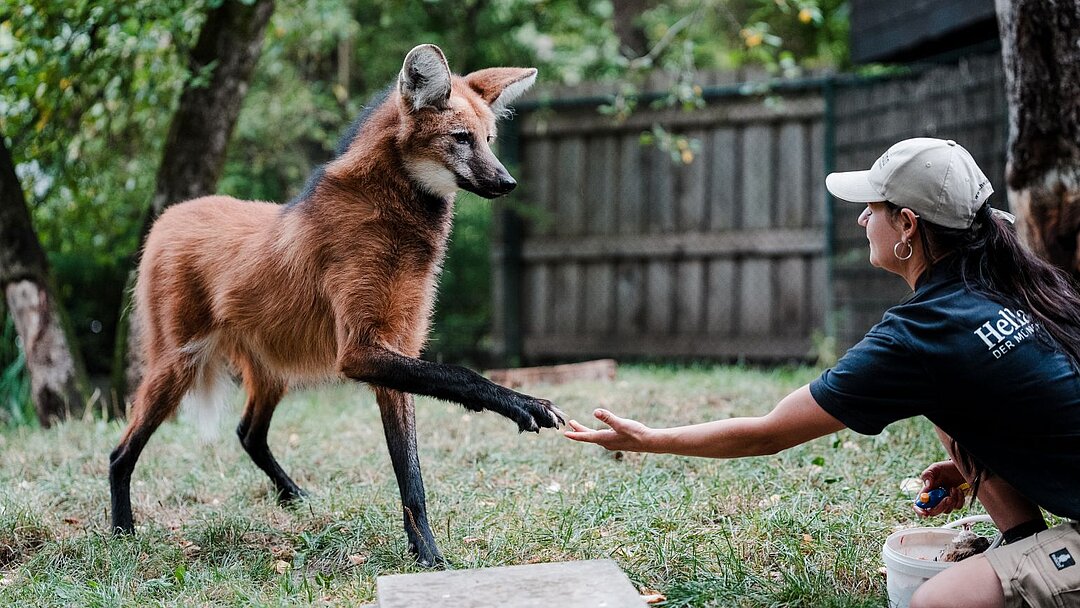
Regular training not only keeps the animals occupied, but also teaches them to go through certain procedures without stress. This means, for example, that medical examinations can be carried out without causing distress, and moving between enclosures can be managed smoothly.
Cleaning a camel’s hooves, weighing a maned wolf or X-raying a polar bear – all this is possible thanks to modern animal training. To make this happen, eight animal keepers at Hellabrunn currently serve as animal training coordinators. They coordinate animal training and, together with their teams, train various animal species, thereby not only making day-to-day work easier but also building trust between humans and animals.
Modern animal training is not about dressage, but about familiarising the animals with routines involved in daily care. They learn to respond to specific signals and to cooperate during examinations or care procedures. In this way, many situations that may be unfamiliar to the animals can be practised step by step, making them as stress-free as possible. There is no standardised training programme: what works for one species may need to be structured completely differently for another, or even for an individual animal.
An important component is what is known as ‘medical training’. This involves the animals learning to assume specific positions or to point out specific parts of their bodies. This means, for example, that blood or urine samples can be taken or X-rays can be taken without the animal needing to be sedated.
Specifically, Frank Staatsmann, an animal keeper and head of animal training at Hellabrunner Polarwelt, works with the three female polar bears, Nuna, Nooki and Giovanna. In what is known as ‘target training’, the animals first learnt to hold their snouts against a target, such as a red dot. By moving the target to different positions, the animal keeper can guide the polar bear to various locations. For example, the female polar bears are taught to rest their heads in a Plexiglas box and keep them still so that an X-ray of their jaws can be taken. This is occasionally necessary in the case of Giovanna due to dental problems. They are also trained to stand up or lift a paw so that their fur and claws can be checked.
“It’s important to us that the animals enjoy taking part in the training. That’s why we use positive reinforcement. A short clicking sound from the ‘clicker’ signals to the animal that it has done something correctly. This is followed by a reward, for example in the form of food. In this way, the animals learn step by step what behaviour we expect from them – but it is always the animal that decides whether it wants to take part,” explains Lena Bockreiß, who is responsible for animal welfare and training at Hellabrunn.
However, modern animal training is not only used for medical examinations, but also to keep the animals occupied, as the training provides them with mental stimulation. Maria Riesch, an animal keeper and head of animal training for the maned wolves, works with these rather shy animals to help them build trust in their keepers. During training, for example, they learn to step onto the scales when given a signal or to allow their claws to be checked. Particularly with shy species, such exercises can make day-to-day life easier, as necessary checks can be carried out without the need for stressful capture where possible.
The smooth transition between different enclosures is also an important part of the training. For example, animals must regularly move between indoor and outdoor areas. So-called ‘husbandry training’ helps animals such as camels to get used to such routines. Animal keeper and animal training manager Lucia Köhler practises with the animals, amongst other things, walking on a halter and passing through a gate calmly. This ensures that necessary moves between enclosures can take place as calmly as possible for both animals and humans.
Zoo director Rasem Baban emphasises the importance of animal training for day-to-day work: “For me, animal training is an integral part of modern animal care. It helps us to look after the animals better in their daily lives and to make medical examinations as comfortable as possible for them. At the same time, it requires a great deal of patience and a good understanding of each individual animal, because every animal is different – and that is precisely what our animal keepers need to adapt to.”
Whether for medical examinations, enrichment or day-to-day interaction: animal training is therefore an important part of modern animal care at Hellabrunn. Visitors can regularly watch the elephants being trained in the Hellabrunn Elephant House at 2.15 pm every afternoon.
Translated by Deepl / AI
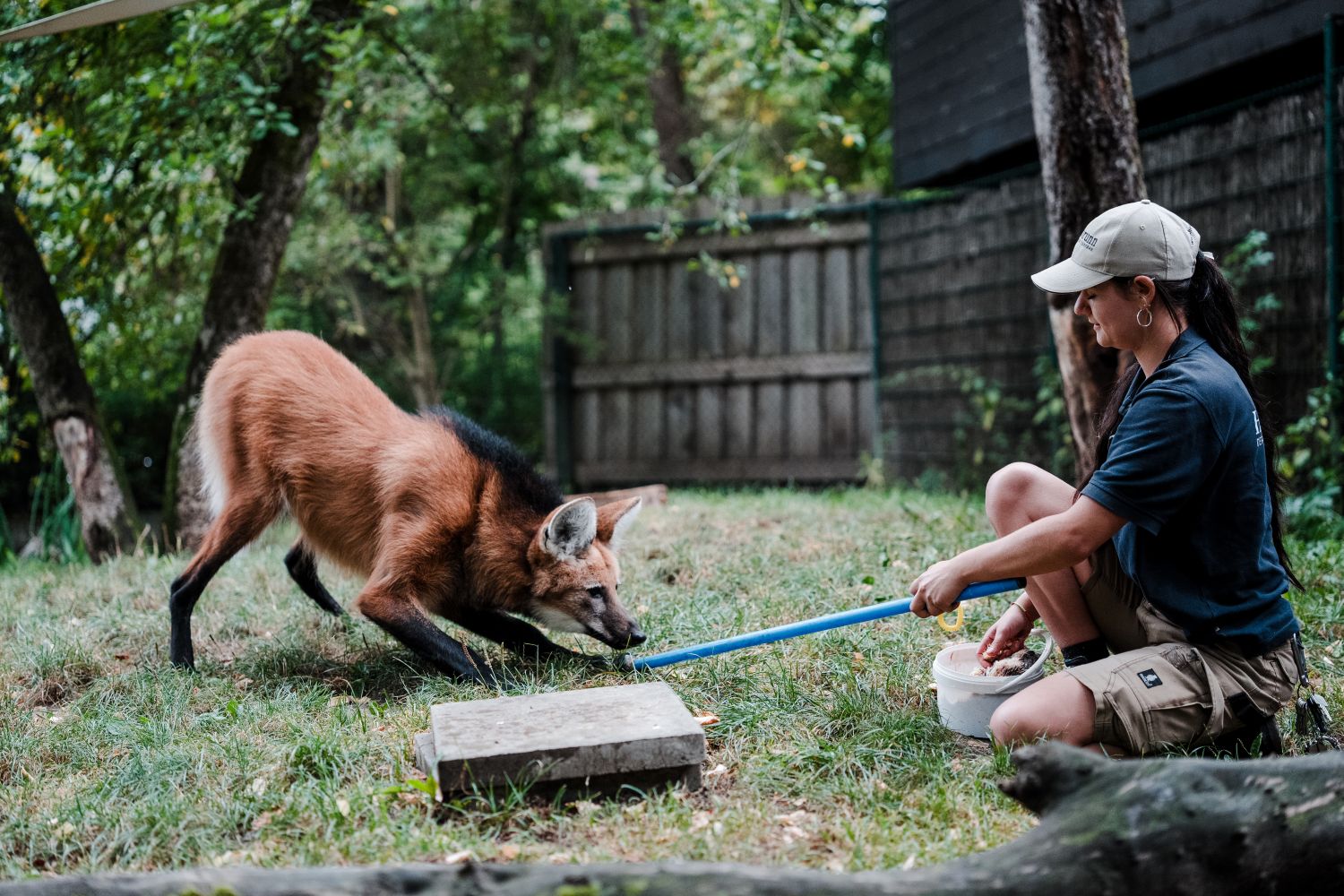
Medical training takes time and patience 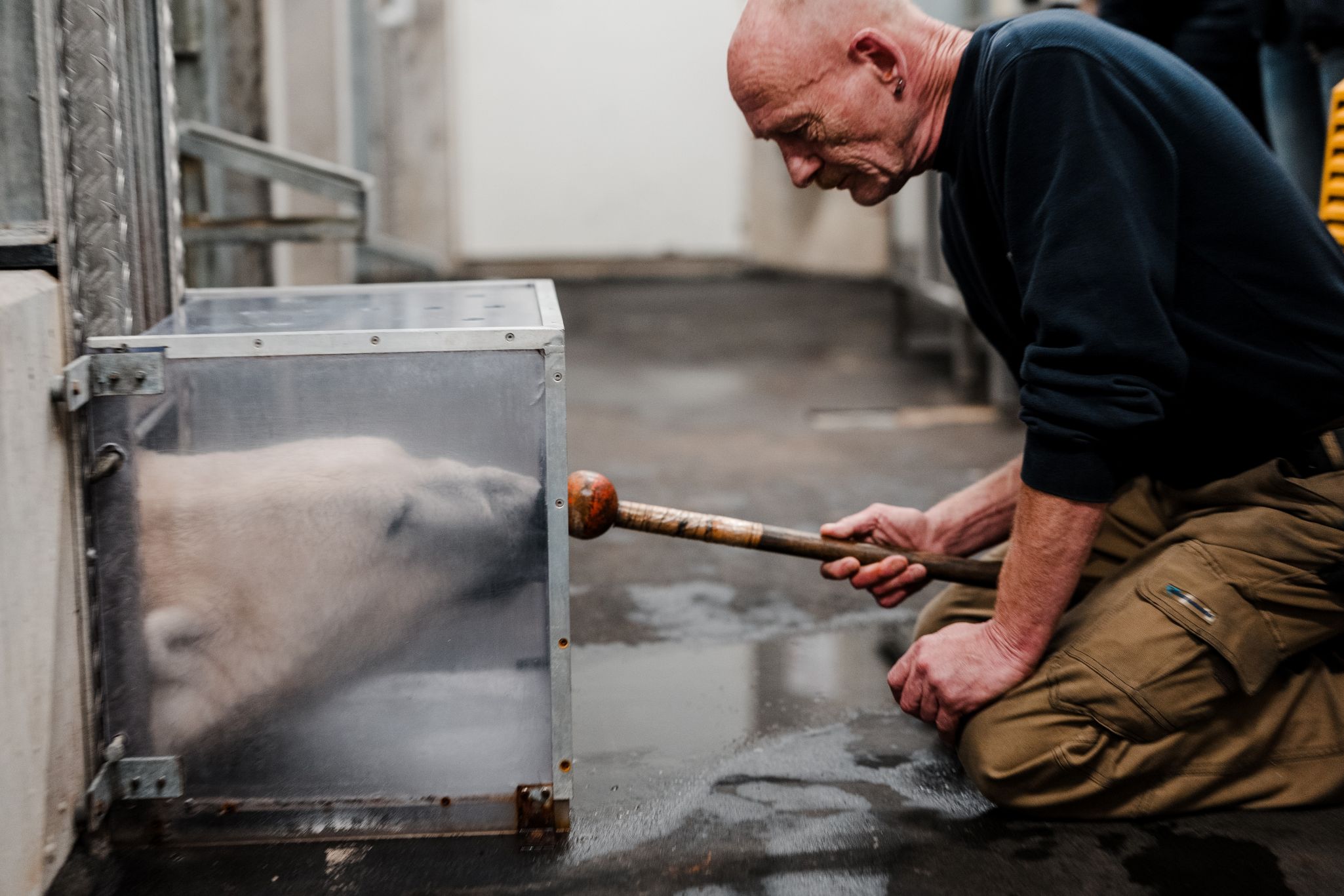
Training with the polar bears to keep your head still – for X-rays of the jaw 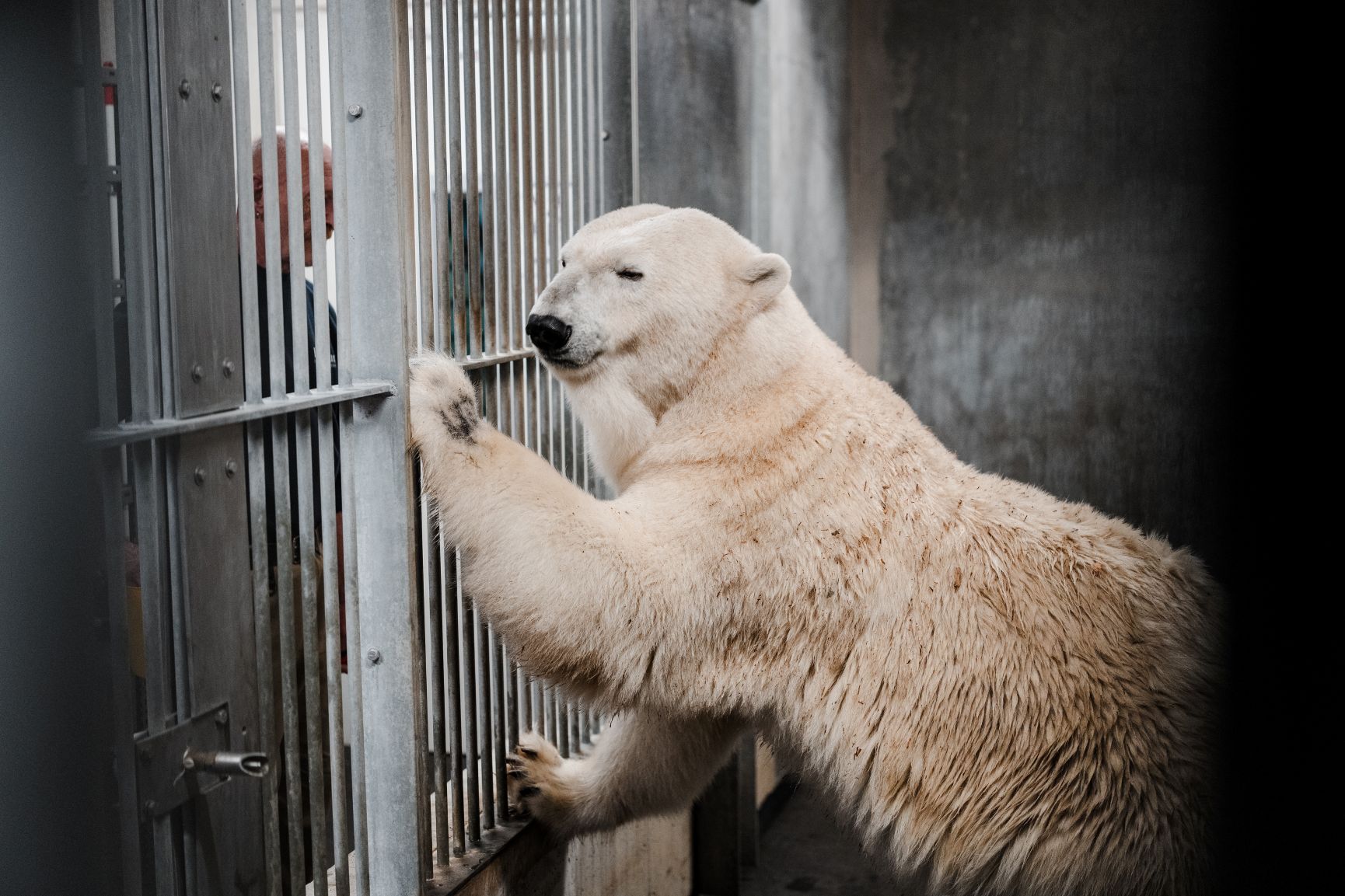
Training builds trust – even behind the security barrier 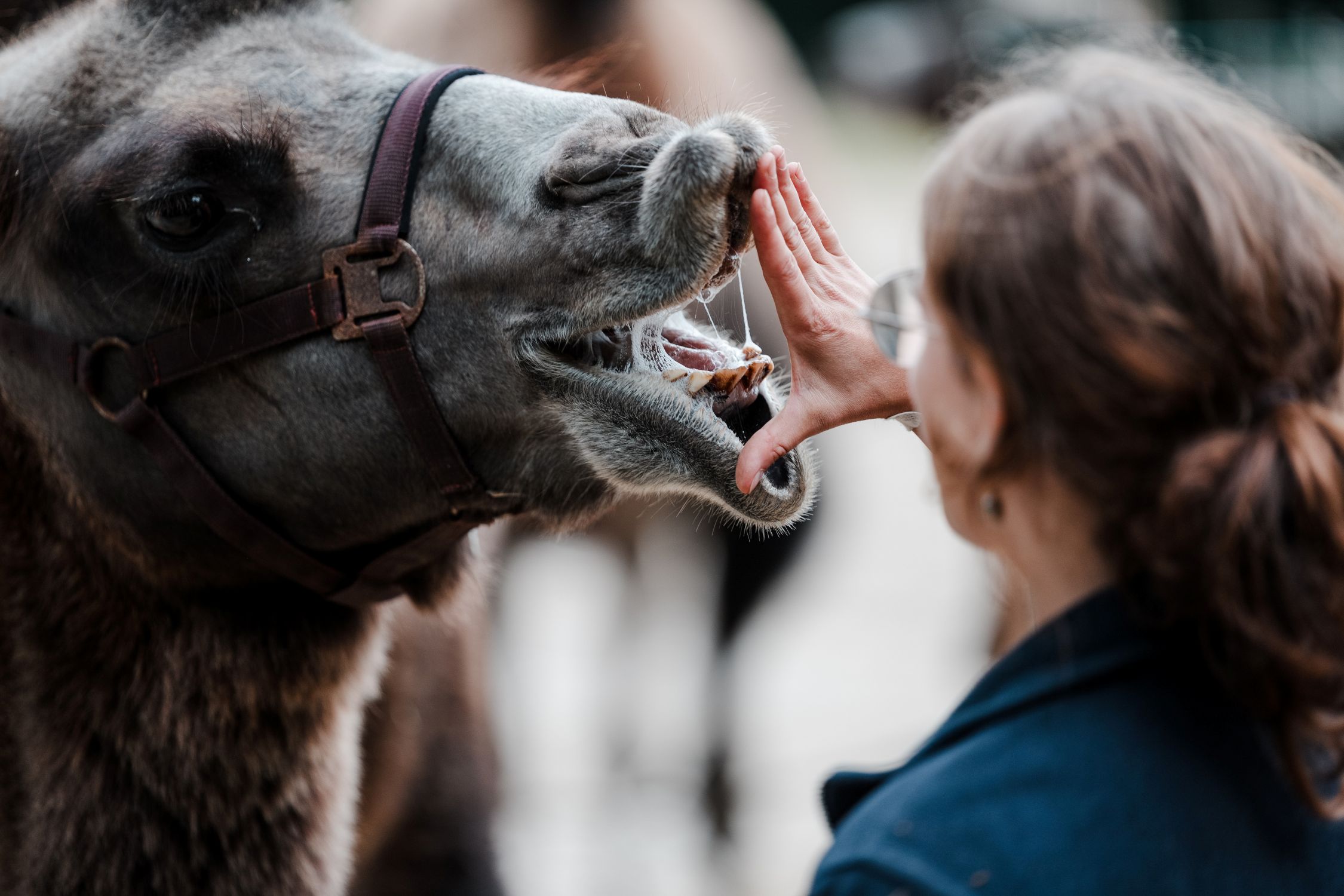
A camel opens its mouth so that its teeth can be checked 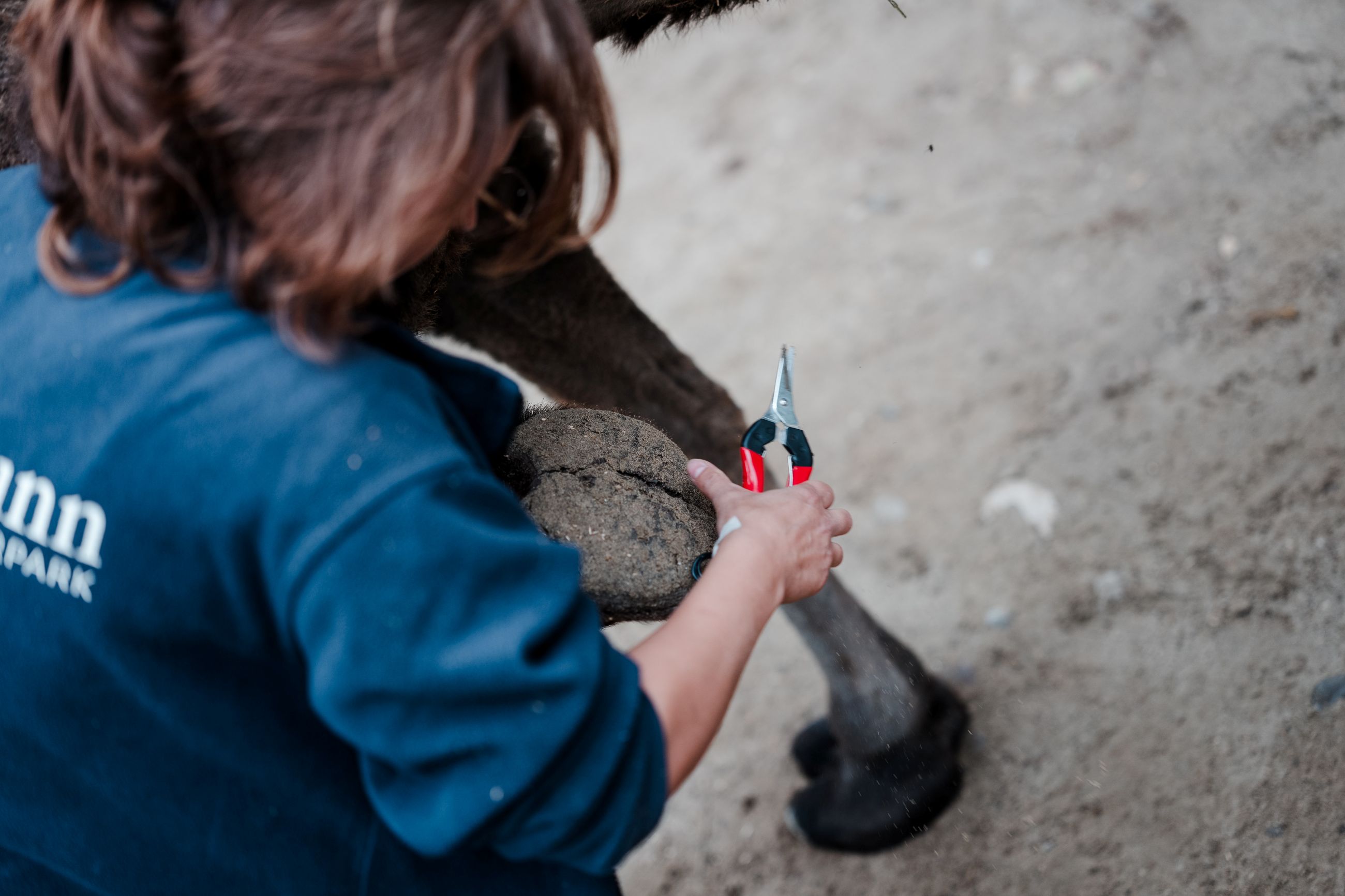
Lift, keep still and allow contact – checking hooves requires patience and trust